


Outfield - Backing Up
One of the best ways to keep yourself in the game and to help your team is to back up on every play when the ball is not hit to you. By backing up you can keep a runner or runners from advancing on an errant throw.
Here are a couple examples to give you an idea:
Position - Right Field
- Situation: Runner on First, batter bunts the ball, ball is fielded and an errant throw is made to first. If you are backing up first on the play, you may be able to keep the runner from going to third and you most likely will keep the batter on first.
Position - Center Field
- Situation: Runner on First, ball is hit back to the pitcher, Ball is fielded and an errant throw is made to second. If you don't move, the runner will easily make it to third. If you are backing, the runner will most likely have to stay at second.
Position - Left Field
- Situation: Runner on first, double play ball hit to the first baseman, first baseman overthrows the shortstop. If you are backing up second you will probably keep the lead runner from advancing to third base. If not, it's an easy extra base and maybe a run.
- Situation: Runner on second, batter bunts the ball, ball is fielded by the pitcher who makes an errant throw trying to get the runner going to third. If you are backing up the play, you may keep the runner from advancing, saving a run, and the batter from going to second.
As the above examples illustrate, backing up can prevent a bad situation from getting worse.
Player Tip
Another benefit of backing up should be mentioned. By backing up on every play you will not only show your coach, but every player on the team the type of hustle and work ethic you have. Two attributes no leader can be without.
Situations
I've included some situations along with responsibilities of the outfielders. I haven't attempted to include all scenarios, but hopefully this will provide some information to players or coaches who don't know where outfielders should be to properly back up a play. In all situations it's important to realize that an outfielder may be needed in a rundown play. By backing up, the outfielder he has placed himself in a position to help in that situation also.
Ball Hit To The Left Side Of The Infield
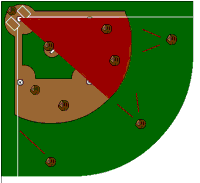
Left Fielder
- Primary responsibility is to back up the infielder fielding the ball.
- After the ball has been fielded, move into a position to backup up any play that may be made at second or third base depending on base runners.
Center Fielder
- Primary responsibility is to back up the infielder fielding the ball or second base if the ball is hit back to the pitcher and a double play will be attempted.
- After the ball has been fielded, move into a position to backup up any play that may be made at second base.
Right fielder
- The primary responsibility is to back up second base on double play ball and first base when there are no runners on.
- If the ball gets through the infield, stop and back up second base.
Ball Hit To The Right Side Of The Infield
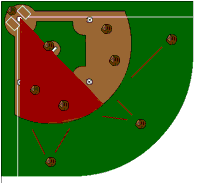
Right fielder
- Primary responsibility is to back up the infielder fielding the ball.
- After the ball has been fielded, center fielder should move into a position to backup up any play that may be made at second.
Center fielder
- Primary responsibility is to back up the infielder fielding the ball or second base if the ball is hit back to the pitcher and a double play will be attempted.
- After the ball has been fielded, move into a position to backup up any play that may be made at second base.
Left fielder
- The primary responsibility is to back up second base or third base.

Most Recent Blog Posts
Working With Players on Focusing on the Correct Part of the Baseball when Hitting (October 15 2016)
Getting More Accurate Throws From Your Team (April 5 2016)


Thanks for all the great information and drills! I've used the site all season and it's made my life so much easier.
- Jim N.